“Why am I copying one agent’s findings into another?”
Let the agents hand off directly.
Coordinator uses native inter-task messages for bounded assignments, results, dependencies, and collision notices when another task actually needs to act.
Stop being the message bus between your AI agents
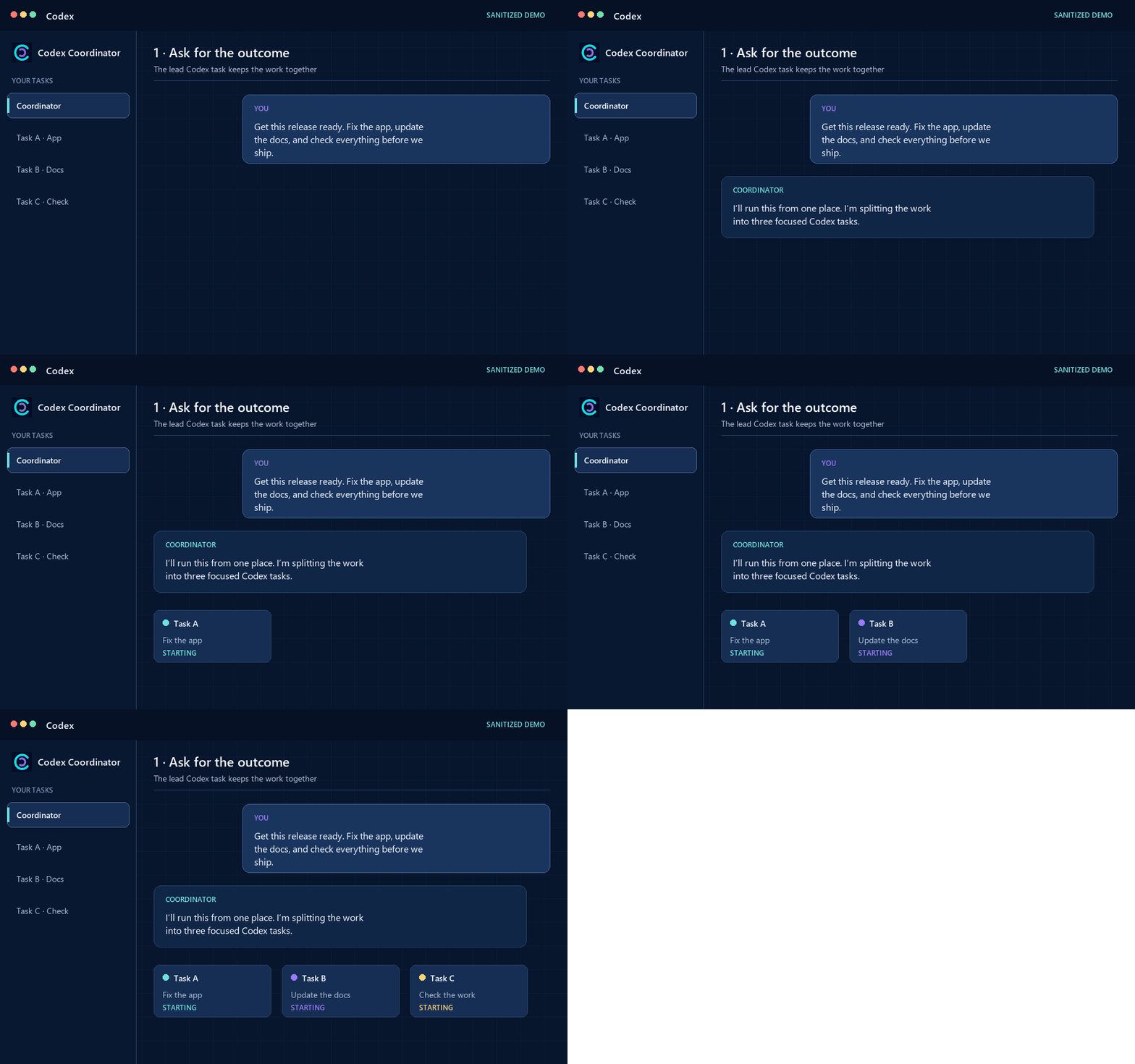
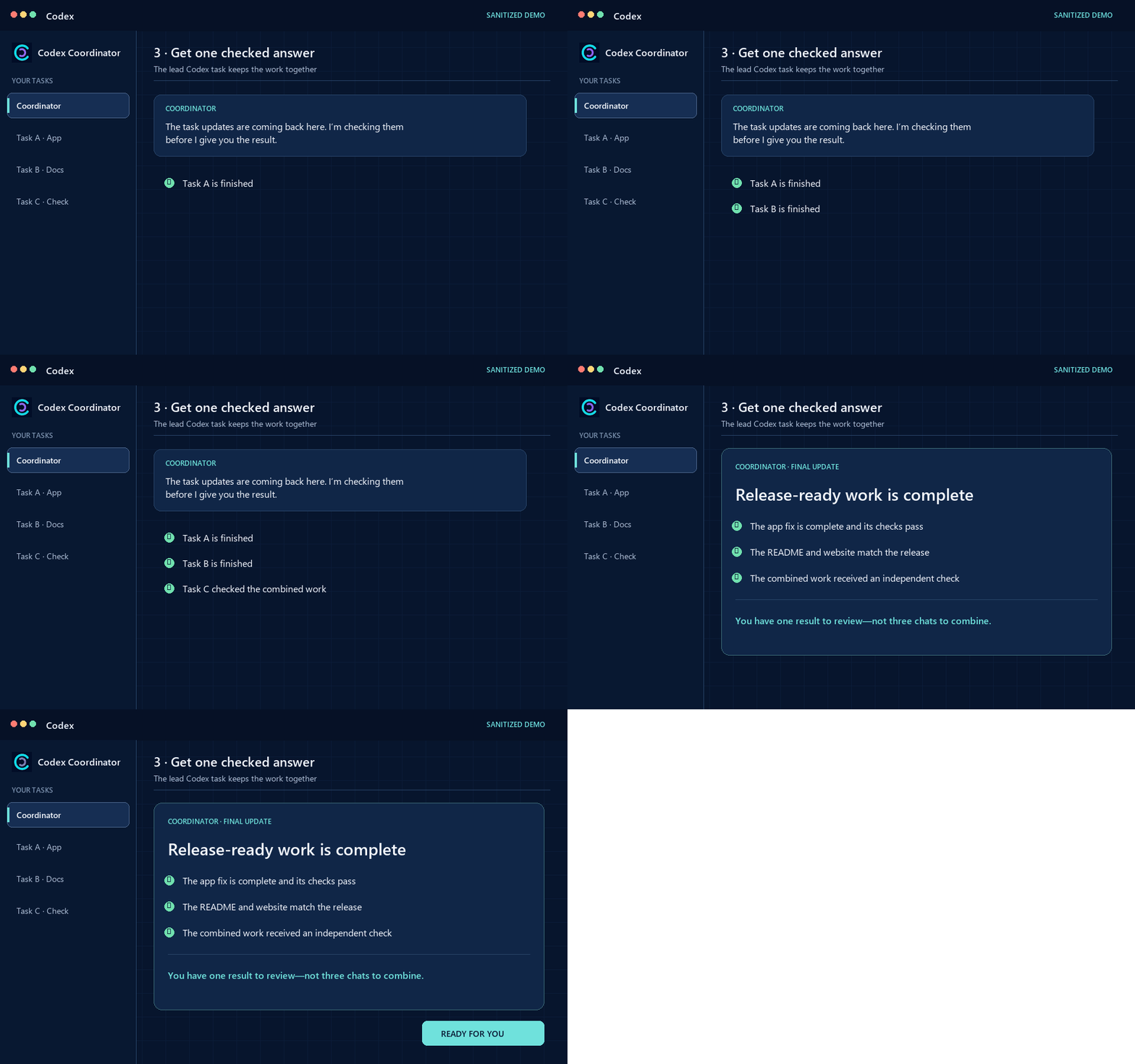
Give Coordinator one goal. Separate Codex tasks use native inter-task messages for the handoffs that matter, each gets a clear job, and the work comes back into one result.
The multi-agent problem
Opening more Codex tasks should create leverage, not turn you into the person copying findings, blockers, and instructions from one window into another.
“Why am I copying one agent’s findings into another?”
Coordinator uses native inter-task messages for bounded assignments, results, dependencies, and collision notices when another task actually needs to act.
“It’s hard to keep track of which clone or worktree belongs to which task.”
Separate tasks can share your existing branch, dependencies, settings, and local tools.
“The main thread and another agent are doing nearly the same work.”
Coordinator reuses related tasks first, then keeps assignments and planned file areas visible.
“I know subagents exist, but I have to remember to ask for them every time.”
Subagents are available on supported non-Ultra intelligence levels when requested directly or through project and skill instructions. Ultra adds proactive delegation.
“My code, tests, and docs are drifting across different chats.”
Tasks work from the same current codebase, with each lane and its planned files visible.
“Did one agent just overwrite or undo work from another thread?”
Tasks re-read shared files, pause on a real collision, and avoid reset, restore, stash, clean, force-push, and broad staging during parallel work.
Built on native Codex messaging. Coordinator does not invent a second chat network. Codex already provides task threads and inter-task messages; Coordinator gives those messages one shared goal, clear ownership boundaries, and rules for when another agent actually needs to hear something.
What changes
Codex does the work and carries the messages. Coordinator keeps the collaboration pointed at one outcome.
Start with the outcome you want, not a separate prompt for every agent.
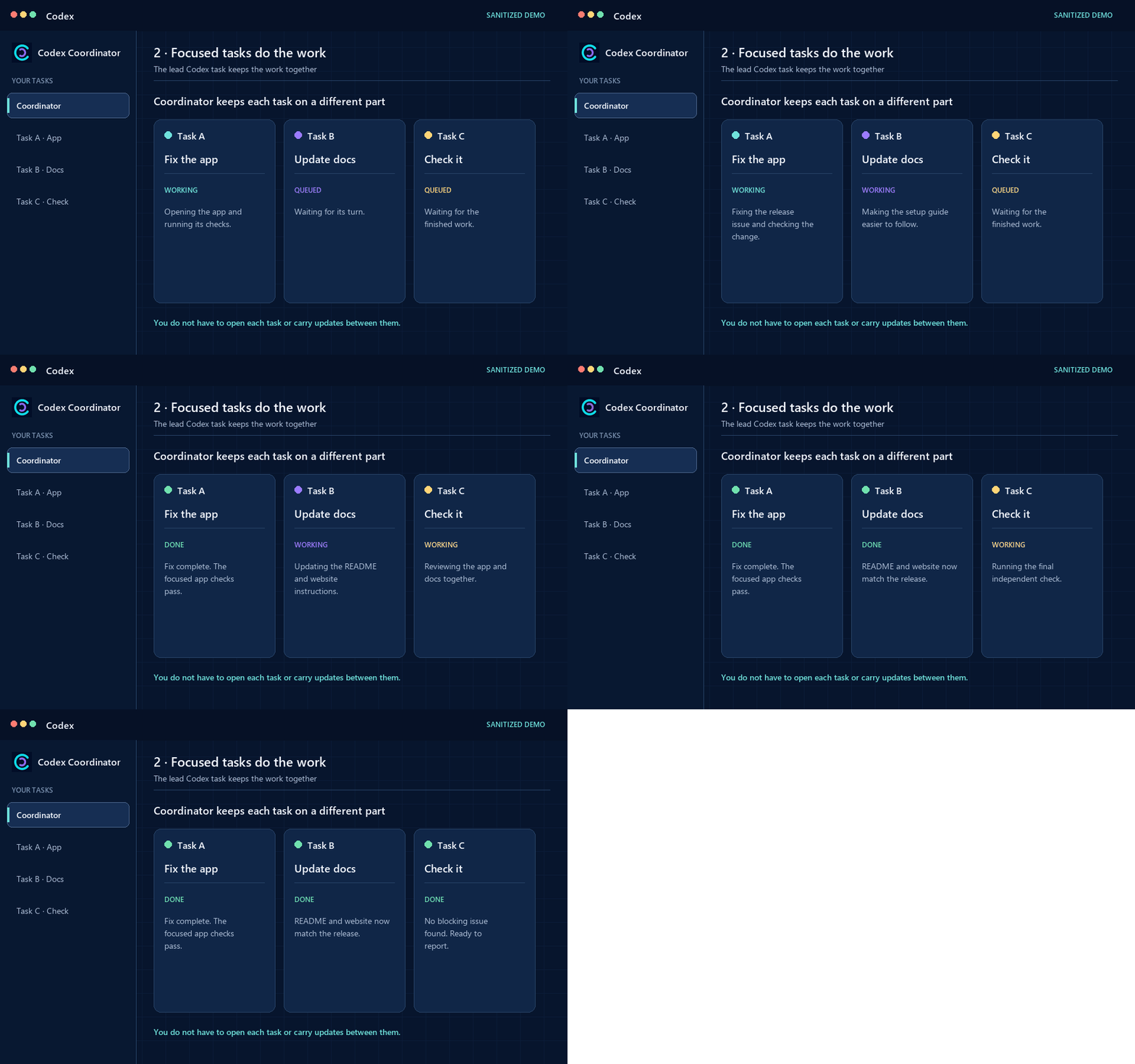
Coordinator reuses useful related tasks first, then gives each durable task one complete job and visible boundary.
Assignments, results, dependencies, and real collisions move through bounded native messages; the goal owner brings the work back together.
See the workflow
Three short views show the workflow. Open optional Mission Control only when you want one read-only overview.
Designed to stay out of your way
Free and open source
Install the current stable release, open your project, and tell Coordinator the result you want.
codex plugin marketplace add eyeinthesky6/codex-coordinator --ref v0.5.0
codex plugin add codex-coordinator@codex-coordinatorUse $codex-coordinator for this project goal:
<describe the outcome you want>Installation never turns Coordinator on for every project. You choose where to use it.
Built in the open
If you have been copying findings between Codex tasks, checking every window, or untangling duplicate work, give those agents one goal and let Coordinator handle the handoffs.